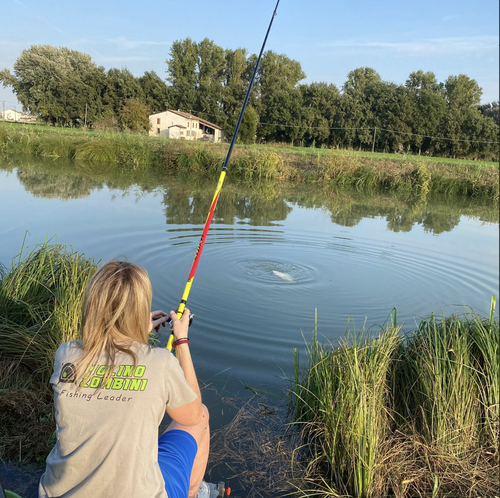

Carp Fishing at Lake Revine: how to fish one of the most technical spots in the Veneto Prealps
Between Tarzo and Lake Revine, at the foot of the Treviso Prealps, two glacial basins do what they’ve done for thousands of years: they sit there, calm, deep, populated by carp that have learned to tell who knows how to fish from who doesn’t. Lake Revine is a spot that settles few arguments and opens many more. Silent, scenic waters, but anything but generous with those who turn up thinking they’ll take home a big result without thinking it through.
If you’re thinking of organising a carp fishing session at Revine, or if you’ve already been and want to understand what went wrong, here you’ll find what you need to know before setting up the rods: environment, bottom, rules, technique and night-session logistics.
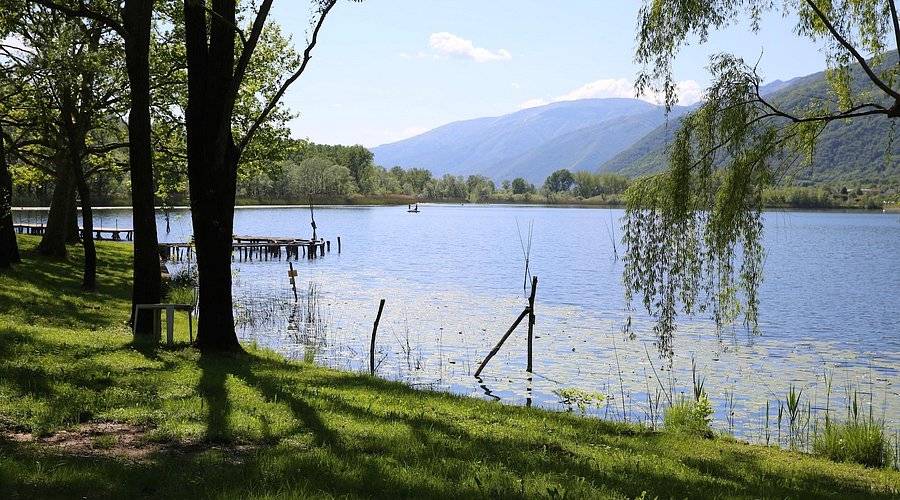
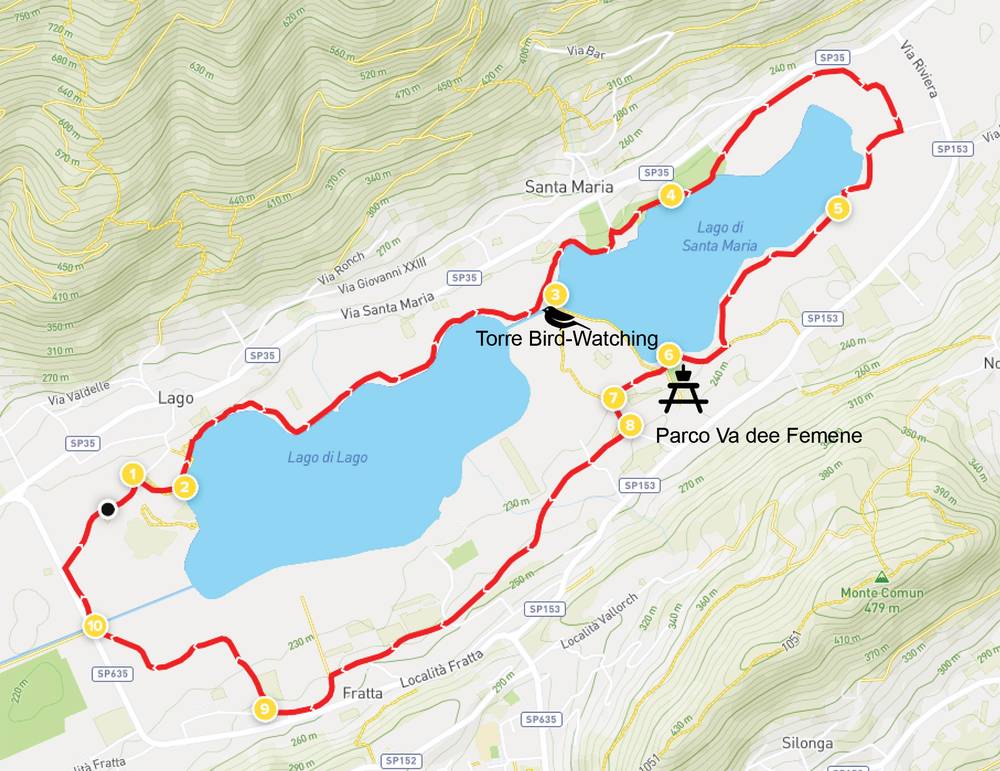
Two lakes, one glacial history: where you are when you fish at Revine
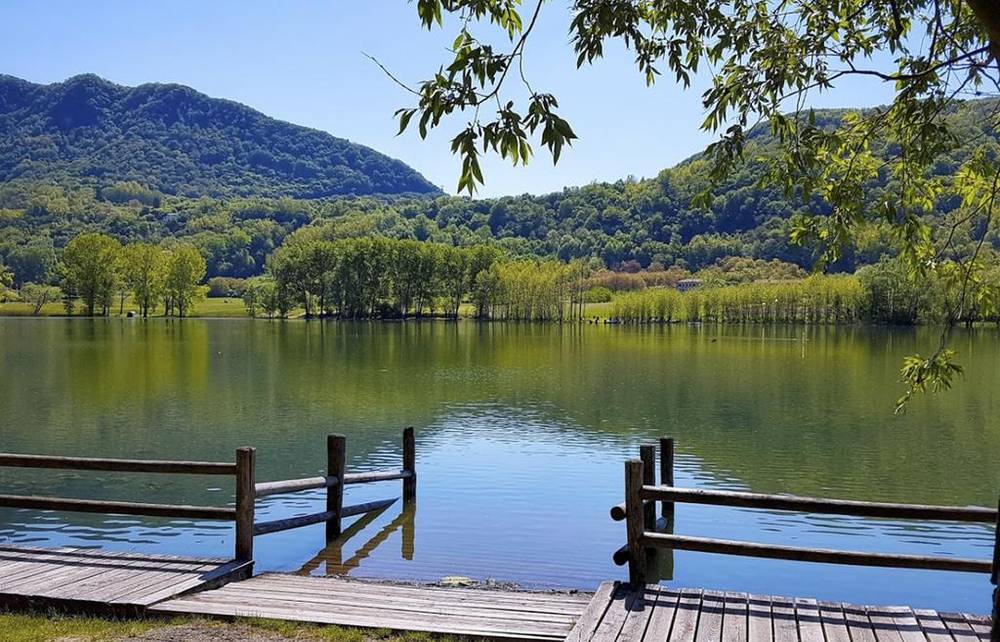
The Revine Lakes are two basins of glacial origin separated by a thin strip of land: Lago di Santa Maria to the east and Lago di Lago to the west. A handful of square kilometres of combined surface area, depth dropping to 10-12 metres at the deepest points, and all around stone hamlets, vineyards, woods climbing the hills of the Quartier del Piave.
For anyone fishing, the first useful thing to know is this: these aren’t man-made pits. They’re living waters, fed by springs and small inflows, with precise seasonal dynamics — a pronounced summer thermocline, autumn turnover, periods of apathy in the depths of winter. Knowing how a glacial lake works helps you understand where and when the carp move, and stops you wasting a session by baiting the wrong spot.
Bottom, weed beds and reedbeds: how to read the spot before you cast
The bottom of Lake Revine is the first thing that separates those who go home with a few catches from those who go home without a single run. Stretches of silt and mud, especially at the deeper points and farther from the banks, alternate with harder zones (compact sand, mixed bottoms, sometimes gravel) where the carp pass through and look for natural food. Three structures worth looking for before you cast:
- Submerged weed beds, especially in the central zones between 4 and 7 metres. They’re pantries, but also traps: fishing inside them means losing fish on the line.
- Perimeter reedbeds, particularly active in spring and summer, when the carp move into them to thermoregulate and to spawn.
- Slope changes between the littoral band and the deeper basin. That’s where the most frequent feeding routes converge.
Without a fish finder, a marker float is the bare minimum. Casting blind, on a lake of these characteristics, is the quickest way to throw away two nights.
Technique and baiting: four rods, hair rig and recipes for “thinking” waters
The carp of Lake Revine are neither few nor predictable. But these are thinking waters: fish that see tackle pass by all year round, bottoms covered in natural food, conditions that shift from one week to the next. Throwing down just any mix and waiting around doesn’t work.
Three things we’ll tell you angler to angler. Pre-baiting, never mass baiting: three runs over the same spot in the two or three days before the session, in measured quantities, are worth more than a bucket dumped on the morning itself. The Revine carp don’t much trust anything that arrives all at once. A mix calibrated to the season: in summer, sweet, fruity baits, birdfood, a moderate share of animal meals; in autumn and winter, boilies with high digestibility, animal meals and fish extracts. Consistency between recipe and water counts for more than the brand on the boilie. Clean hookbait, exposed hook: the hair rig isn’t just regulation — at Revine it also makes the difference on the strike. A balanced pop-up, hair length suited to the bottom, a carbon or fluorocarbon hooklink near the weed beds.
Waters to listen to before you fish them
Lake Revine isn’t a spot for your first session, and that’s what makes it great. Calm waters that demand interpretation, bottoms that reward those who study them, carp that don’t forgive haste. Those who keep coming back do so because here technical fishing still has meaning, and because every catch takes home something that stays with you.
For over thirty years we’ve been selecting raw materials and refining recipes that actually deliver on the bank, even in difficult waters like these. If you’re preparing a session and want to talk through the mix, the flours, the right baiting for Revine, give us a call: we at the Molino will help you build the right recipe for your spot. The Molino Zombini Family.